


Is Your CIBIL Score Secretly Dropping? The Mistake You Might Be Making Right Now!




Experience the all-new Kotak Netbanking
Simpler, smarter & more intuitive than ever before


Quick Help
Frequently Asked Questions
Show More
For Kotak Bank Customers
For Kotak811 Customers
Experience the all-new Kotak Netbanking Lite
Simpler, smarter & more intuitive than ever before. Now accessible on your mobile phone!
No. When you check your own score, it is considered a 'soft inquiry' and has no impact on your credit calculation.
No. Your income is not considered in the calculation; the score only reflects how you manage and repay your debts.
It typically takes around 15 days for lenders to report your payment data to the bureau and for the score to update.
No. Closing an old card shortens your Credit Age (which is 15% of your score) and reduces your total available credit limit, which instantly spikes your Credit Utilisation Ratio. Both these factors can lead to an immediate drop in your score.
Disclaimer: This Article is for information purpose only. The views expressed in this Article do not necessarily constitute the views of Kotak Mahindra Bank Ltd. (“Bank”) or its employees. The Bank makes no warranty of any kind with respect to the completeness or accuracy of the material and articles contained in this Article. The information contained in this Article is sourced from empanelled external experts for the benefit of the customers and it does not constitute legal advice from the Bank. The Bank, its directors, employees and the contributors shall not be responsible or liable for any damage or loss resulting from or arising due to reliance on or use of any information contained herein
 Success
 Failure








Introduction
A credit score is often the first thing a lender assesses when you apply for a loan or a credit card. In India, the Credit Information Bureau (India) Limited (CIBIL) score is the most widely recognised metric.
So, what is a CIBIL score? It is a three-digit summary of your credit history, ranging between 300 and 900. It reflects your creditworthiness based on your past borrowing and repayment behaviour. A higher score indicates a responsible credit behaviour, making it easier for you to secure credit at competitive rates.
Table Of Content
5 Key Factors That Determine Your CIBIL Score
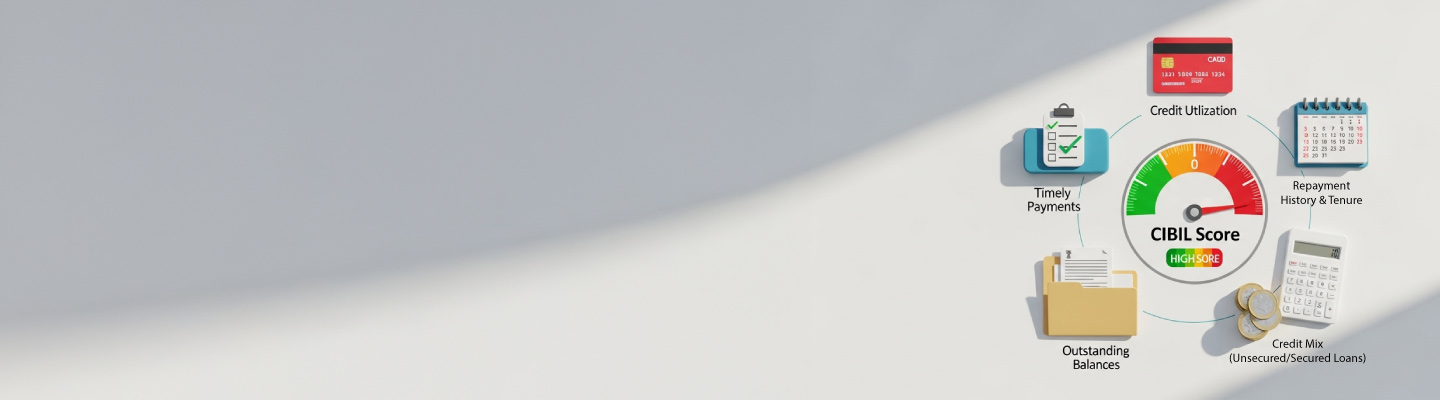
Your credit score depends on several financial habits, not just one event. Each factor has its own level of importance in the final score.
How CIBIL Score Is Calculated: The Algorithm Explained
The process of calculating a credit score involves a complex algorithm that evaluates hundreds of data points from various banks and financial institutions.
Under current RBI regulations, lenders must report your credit data every 15 days. This fortnightly reporting makes your CIBIL score is more dynamic than ever, reflecting repayments or new debts twice a month instead of the traditional 30-45 day cycle.
It is important to note that the algorithm does not consider your income, investment portfolio, or savings account balance. It is strictly based on your credit-related activities.
Conclusion
Maintaining a score above 750 requires consistent effort and a structured approach to your finances.
The most effective way to maintain a healthy score is to ensure every payment is made on time. You should also keep your credit card spending well within your assigned limits and avoid applying for multiple loans simultaneously.
Periodically checking your credit report for any inaccuracies and raising a dispute through the official channel can also prevent your score from dropping due to clerical errors.
We, at Kotak Mahindra Bank, believe that a good credit score is the key to financial freedom. We can help you on your path, whether you want to buy your first home or use a credit card to pay for everyday things. We have a clear method and advice to help you easily understand your credit needs.
For help choosing the best products to meet your financial objectives and keep your credit score high, contact Kotak Mahindra Bank.
You have already rated this article
OK