


Ways to Make Credit Card Bill Payments




Experience the all-new Kotak Netbanking
Simpler, smarter & more intuitive than ever before


Quick Help
Frequently Asked Questions
Show More
For Kotak Bank Customers
For Kotak811 Customers
Experience the all-new Kotak Netbanking Lite
Simpler, smarter & more intuitive than ever before. Now accessible on your mobile phone!
Yes. You can use the NEFT facility or the UPI service in any bank's app to pay the dues on a credit card issued by another bank.
In most cases—especially with UPI or the issuer’s mobile app—the available credit limit is updated almost immediately, though the statement may take a short time to show the entry.
Yes. You can modify or cancel your auto-debit instructions through net banking or by visiting your branch, as long you do so before the scheduled deduction date.
There’s no need to panic. You should wait 48 hours for the transaction to settle or contact the customer support team with your transaction reference number for resolution.
Disclaimer: This Article is for information purpose only. The views expressed in this Article do not necessarily constitute the views of Kotak Mahindra Bank Ltd. (“Bank”) or its employees. The Bank makes no warranty of any kind with respect to the completeness or accuracy of the material and articles contained in this Article. The information contained in this Article is sourced from empanelled external experts for the benefit of the customers and it does not constitute legal advice from the Bank. The Bank, its directors, employees and the contributors shall not be responsible or liable for any damage or loss resulting from or arising due to reliance on or use of any information contained herein
 Success
 Failure





Introduction
Managing a credit card well means not only using your credit limit wisely but also ensuring timely repayments. Paying your bills on time keeps your credit score healthy and helps you avoid extra interest.
With more digital options available in India, you now have multiple convenient ways to pay your credit card bills.
You can choose fast digital payments or stick with traditional methods—whatever works best for you and aligns with your bill’s due date.
Table of Contents
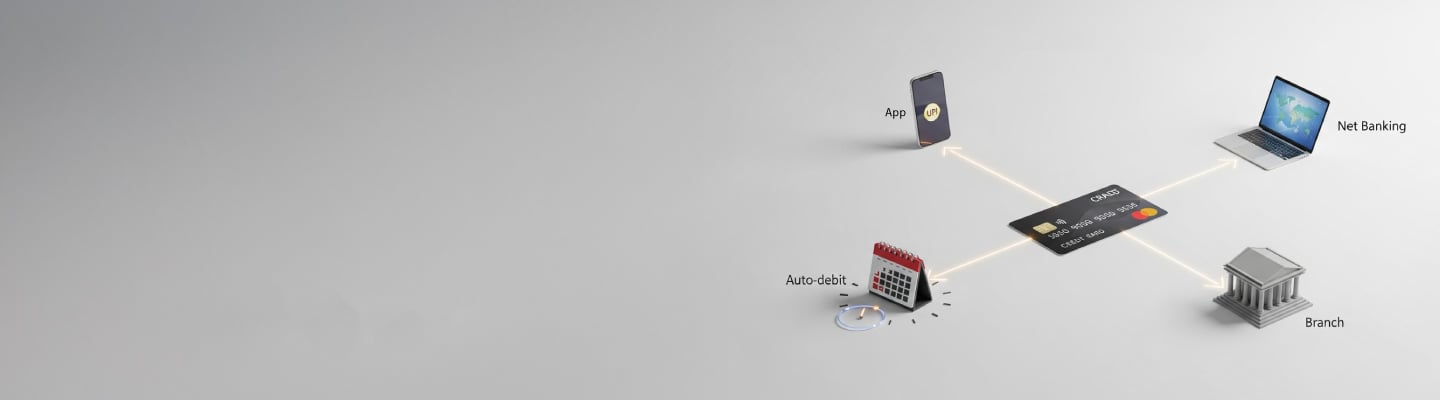
Online Payment Methods: Net Banking, Mobile App, UPI & More
For most people, paying credit card bills online is the easiest and fastest option. Digital payments are processed quicker than physical methods and allow you pay from anywhere, anytime.
Net Banking and Mobile Applications
Most banks offer mobile apps or net banking portals where you can safely make payments stay within the bank’s system. Simply log in, navigate to the Credit Cards section, and select ‘Pay.’ You can pay the full amount, the minimum due, or any amount you choose.
Unified Payments Interface (UPI)
Unified Payments Interface (UPI) has made payments easier. You can pay your bill using any UPI app by simply entering your credit card details or scanning a QR code from your statement. Payments are instant, and you don’t need to remember net banking passwords, making UPI a popular choice for quick payments.
Bharat Bill Payment System (BBPS)
The Bharat Bill Payment System (BBPS) brings multiple banks and billers under one unified platform. Most banking apps feature a 'Bill Pay' or BBPS section that automatically pulls your latest statement details, so you don’t have to enter your balance manually.
National Electronic Funds Transfer (NEFT)
If your credit card is issued by a different bank than your savings account, you can use NEFT to pay. Add your credit card as a 'Beneficiary' with the card number as the account number and use the IFSC code provided by your card issuer. This method is reliable but may take a few hours or up to a day to reflect in your card account.
Offline Payment Options and Setting Up Auto-Debit
Even though digital payments are widely used, offline options remain relevant—especially if you prefer cash or want a physical receipt.
Cheque Payments
You can deposit a cheque at your bank branch or drop it in a cheque box. Make sure to write your credit card number and contact details clearly on the back. Since cheques take time to clear, submit them a few days before your due date to avoid late payments.
Cash Payments at Branches
To pay in cash, visit your bank branch and fill out a pay-in slip. Your payment is usually processed quickly, but banks may charge a nominal fee for handling cash payments.
ATM Transfers
If you hold a debit card from the same bank, you can use an ATM to pay your credit card bill. Just insert your debit card, choose 'Credit Card Payment' and transfer money from your savings account to your card.
The Convenience of Auto-Debit
To avoid missing payments, you can set up auto-debit instructions. Your bank will automatically deduct either the total due or minimum amount from your savings account each month. This ensures you stay on track with your payments.
Important Regulatory and Safety Aspects
When paying your bills, always prioritise safety. Use only official bank websites or trusted apps. Banks must offer several payment options to make things easier for you.
If you pay through an external platform, your card issuer may take additional time to confirm the payment. Keep your transaction ID or digital receipt in case you need to resolve any issues.
Conclusion
Understanding your payment options is the first step to managing your credit card responsibly. Digital methods such as UPI, net banking and mobile apps are fast and convenient, while offline options like cheques are useful if you prefer paper records. Choose the method that best fits your schedule and ensure your payment arrives before the due date.
At Kotak Mahindra Bank, we aspire to make banking easy and stress-free for you. Our team is here to help you get a new credit card or manage your existing accounts. We assist you with digital tools and personal support to make it easy to keep track of your payments.
If you have questions about your billing cycle or want to learn about our credit products, contact Kotak Mahindra Bank for help. Our experts can give you clear answers so you can make informed decisions. We are here to support you with your financial needs.
You have already rated this article
OK